
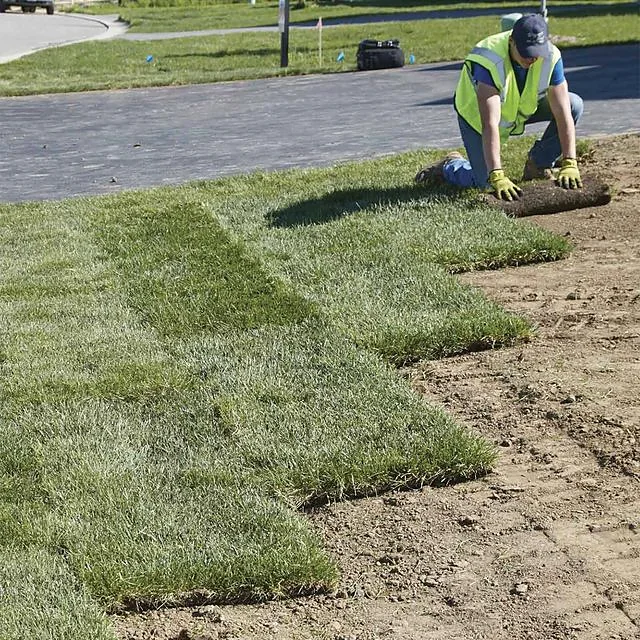
Start with grading and soil preparation
Remove weeds, debris and failed turf, then establish a smooth grade that sheds water appropriately and meets walks, patios and curbs cleanly. Good sod cannot compensate for low spots, buried construction debris or a poorly prepared root zone.
Install onto a firm, smooth surface
The soil should be prepared and level without being fluffy enough to settle dramatically later. Sod pieces should be laid tightly with staggered seams, without stretching, and trimmed cleanly around curves and obstacles.
Water immediately
Do not wait until the entire property is finished if the first sod has been sitting in sun and wind. Begin watering as soon as practical. The sod and the upper soil beneath it need to become thoroughly moist so the roots can begin moving into the prepared soil.
Keep it moist, then gradually reduce frequency
New sod needs frequent attention at first, but the goal is not permanent saturation. Check beneath a corner rather than judging by the colour of the blades alone. As rooting improves, reduce frequency and encourage deeper watering. Weather, soil type, shade and irrigation output change the schedule.
Limit traffic while roots are knitting in
Foot traffic, pets and equipment can shift pieces and create depressions while the soil is wet and roots are shallow. Use the lawn only as much as necessary until the sod resists a gentle lift at the edges.
Mow when the sod is rooted enough to stay put
Wait until the turf has enough root hold that mowing will not move the pieces. Use a sharp mower, avoid saturated soil and remove no more than roughly one-third of the leaf height at the first cut.
Watch for edges and high spots drying first
Perimeters, slopes and areas near hot pavement often dry faster. Shaded low areas can remain wet much longer. A uniform timer setting does not mean uniform soil moisture, so inspect the lawn rather than assuming every square foot needs the same water.
Fix early problems before they become permanent
Open seams, settling, standing water or sections that are not rooting should be addressed quickly. The earlier the grade, contact or irrigation issue is corrected, the less visible it will be once the turf matures.