
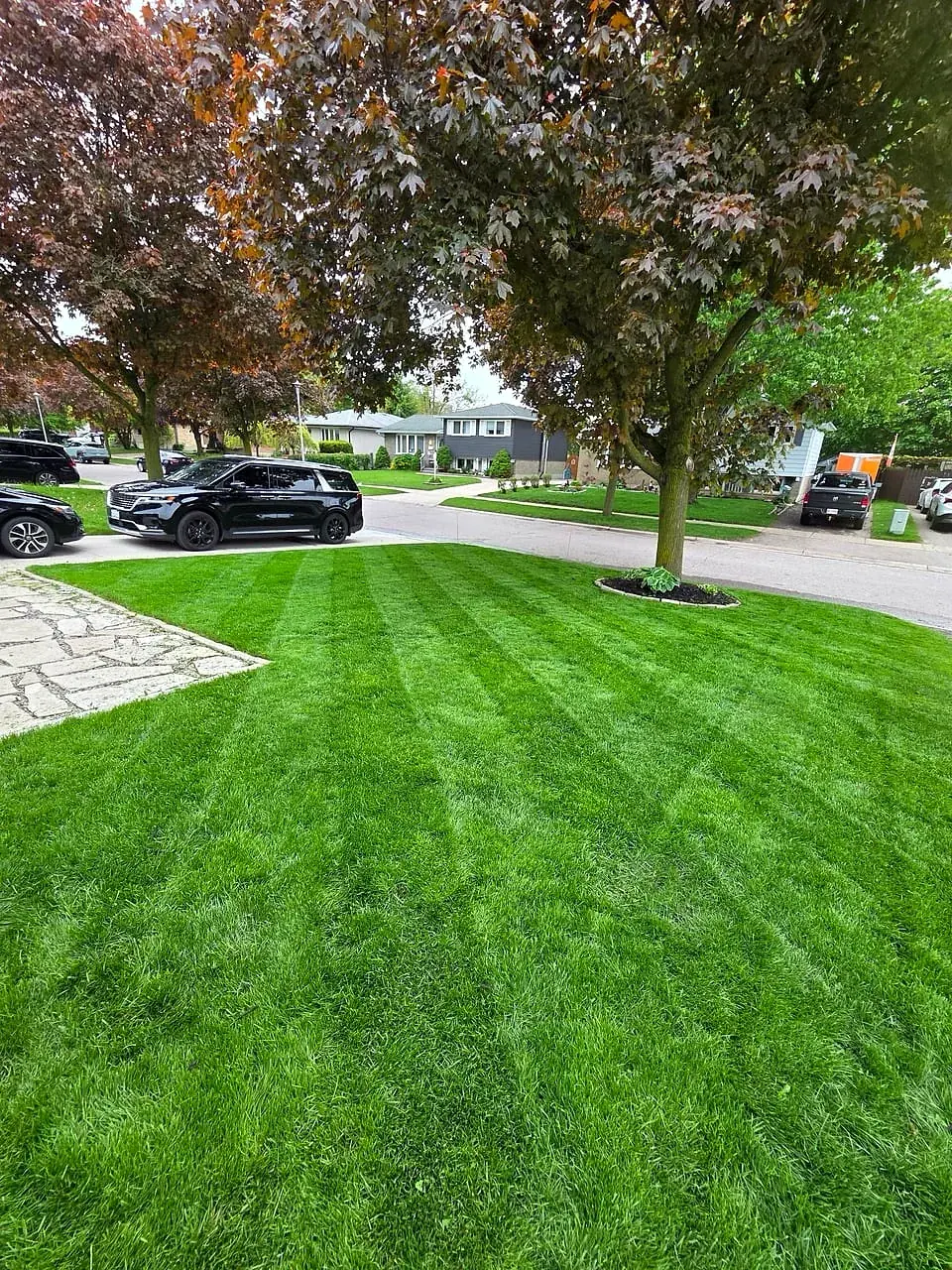
A taller cut is usually safer than a scalp
For many established cool-season lawns, a finished height around roughly 7 to 9 centimetres is a useful starting range during much of the season. Exact height depends on grass type, density, irrigation, shade and weather, but routinely cutting extremely short creates unnecessary stress.
Follow the one-third rule when growth surges
Try not to remove more than about one-third of the grass blade in a single cut. During fast spring growth, that may mean mowing more often rather than taking a large amount off once a week. If the lawn gets away from you, bring it down gradually.
Raise the mower during heat and drought
Longer leaf blades shade the soil surface and support a deeper, more resilient plant. During hot, dry periods, raising the mowing height and reducing unnecessary traffic is usually better than forcing the lawn to maintain a short spring look.
Sharp blades matter
A dull blade tears grass instead of cutting it cleanly. Frayed tips lose moisture faster and make the entire lawn look pale or brown at the top. Blade condition can be just as important as the height setting.
Change direction and protect wet turf
Alternating mowing patterns can reduce repeated wheel tracking and give the lawn a more even appearance. Avoid mowing saturated soil when equipment will leave ruts or compact the root zone.
Do not scalp the final mow
The last fall cut should leave the lawn tidy, not shaved. Continue mowing while the grass is growing, then stop as growth slows. A dramatic last-minute reduction is not a substitute for good season-long mowing.
The “best height” moves with conditions
A dense irrigated sunny lawn, a shady lawn under mature maples and a drought-stressed boulevard may all need slightly different handling. Good mowing responds to what the turf is doing rather than locking one setting for the entire season.