
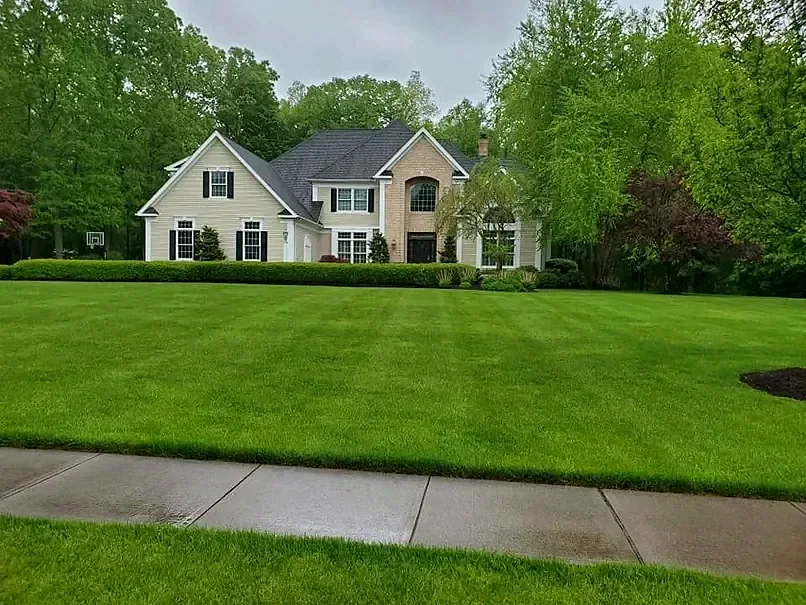
Mow for plant health first
Leave enough leaf blade to support the roots and shade the soil surface. During much of the season, many cool-season lawns perform well at a moderately tall mowing height. Use sharp blades, change direction periodically and avoid removing more than about one-third of the blade at once.
Water deeply enough to matter
Frequent light sprinkling can encourage shallow rooting. Established lawns generally respond better to fewer, deeper irrigations adjusted for rainfall, soil type and heat. The goal is moist root-zone soil without keeping the surface constantly wet.
Overseed before the lawn becomes thin
Dense turf is one of the best defences against weeds. Overseeding is most effective when seed reaches soil, receives consistent moisture and has enough suitable weather to establish. Correct the reason for thinning — shade, traffic, compaction or drought — at the same time.
Understand the soil
Compacted clay, poor drainage, buried construction material and shallow topsoil can all limit roots even when the surface looks green after fertilizer. Soil testing can guide nutrient and pH decisions, while physical site assessment reveals drainage and compaction issues a lab report cannot.
Feed to support growth, not force it
Fertilizer should complement mowing, water and soil management. Excess nitrogen can create rapid soft growth and increase mowing demand without fixing root-zone problems. Apply only according to the product label and conditions.
Treat weeds as information
Dandelion, plantain, clover, crabgrass, ground ivy and other weeds often exploit weak turf. Identify what is creating the opening and strengthen the lawn rather than relying only on repeated spot control.
Respect shade limitations
Turfgrass has a minimum light requirement. Under dense mature trees, raising the canopy where appropriate, adjusting irrigation, using shade-tolerant seed and accepting a less aggressive lawn can help. In very dark areas, a garden bed or groundcover may be more realistic than constantly replacing grass.
Aeration is useful when compaction is actually present
Core aeration can help compacted soil and improve air and water movement, especially in heavily trafficked lawns. It is not automatically necessary every season for every lawn. Use it when the condition of the soil justifies it.
Fall cleanup protects the work you did all season
Keep thick leaf mats off the turf, continue mowing while growth remains active and avoid sending the lawn into winter excessively long or scalped. A healthy fall finish makes spring recovery easier.
Consistency beats rescue work
A lawn maintained at the correct height, watered intelligently and kept dense usually needs fewer dramatic interventions. The objective is to keep the turf from becoming a problem rather than repeatedly bringing it back from one.