
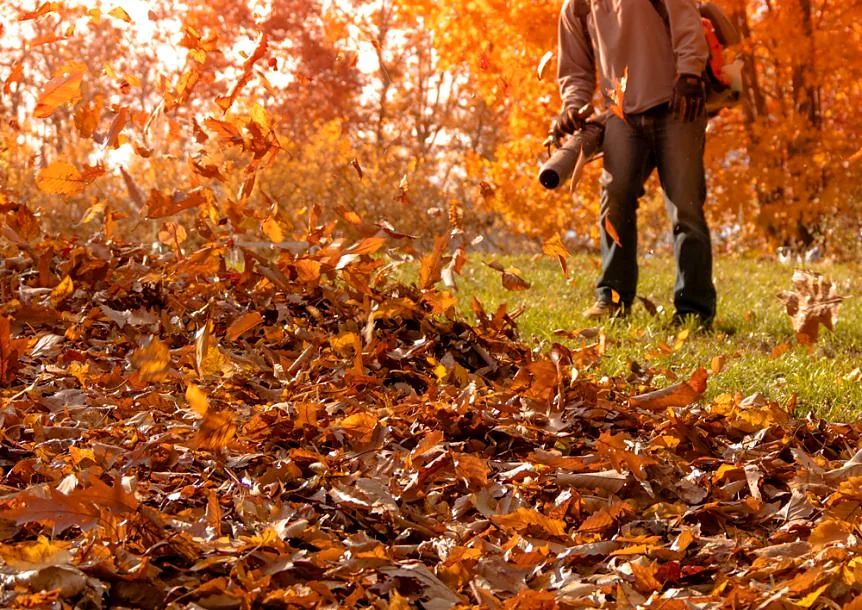
Wet leaves can smother turf
A dense mat of wet leaves blocks light and air and holds moisture against the turf. Long periods under leaf cover can contribute to thinning, matting and disease pressure before spring ever arrives.
Beds need judgment, not a blanket cutback
Some perennials can be cut down in fall while others are better left standing for winter structure, wildlife or crown protection. Established gardens should be assessed plant by plant rather than cleared indiscriminately.
Drainage and hard surfaces matter too
Leaves packed into drains, window wells, interlock joints and low points can create problems during freeze-thaw cycles. A complete cleanup addresses the edges of the property as well as the lawn.
The final mow should fit conditions
Turf should go into winter tidy but not scalped. Final mowing height depends on growth, moisture and weather; the goal is to avoid long matted grass without stressing the lawn before dormancy.
Heavy-canopy properties may need more than one pass
Late-dropping trees can refill a property after an early cleanup. Two planned passes are often better than leaving turf buried until every last leaf is down.
Book before the calendar compresses
The fall window gets short quickly once leaves drop, daylight decreases and freezing weather arrives. Early booking protects route space and gives more flexibility to time the work around the property.