
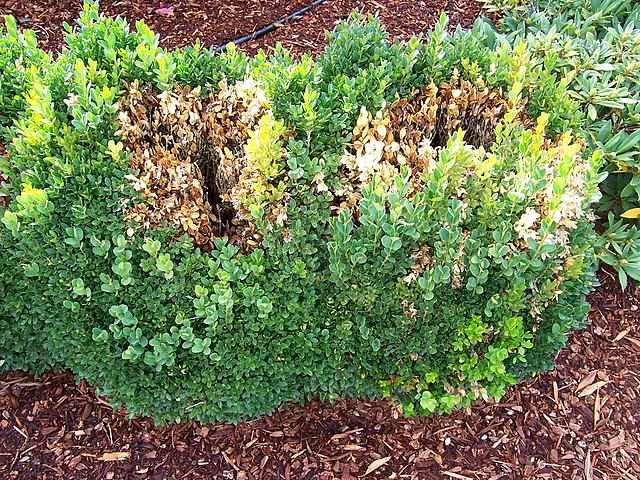
Know the warning signs
Possible boxwood blight symptoms include dark leaf spots, rapid leaf drop and dark streaking or lesions on green stems. The plant can look as if sections suddenly collapsed. Winter burn, drought, root problems, insects and other diseases can look similar, so diagnosis matters before deciding on removal.
Treat fallen leaves as part of the problem
When boxwood blight is suspected, do not simply prune the plant and leave debris below it. Infected leaves and stems can remain a source of inoculum. Keep clippings contained and avoid dragging contaminated debris through other boxwood areas.
Sanitize tools between plants and properties
Pruning equipment can move disease mechanically. If blight is suspected, stop routine hedge work, separate the tools used on that area and clean and disinfect equipment before using it on healthy boxwoods elsewhere.
Reduce prolonged leaf wetness
Dense foliage and repeated overhead watering create long periods of moisture on leaves. Where practical, water at soil level, improve air movement and avoid working through wet plants when disease is active.
Do not rely on a cosmetic trim
Shearing an infected hedge may temporarily improve the outline while distributing contaminated material. Severely affected plants may need removal, and nearby boxwoods should be monitored closely. Preventive fungicide programs, where appropriate and legal, need correct diagnosis and label-compliant professional use; they do not restore dead tissue.
Consider replacement strategy carefully
If a formal boxwood planting has repeated disease problems, replacing one plant at a time may not solve the underlying risk. The layout, cultivar choice, airflow and presence of infected material nearby should all be considered before replanting.
Get a diagnosis when the symptoms are unclear
Before removing a mature hedge, take clear photos of leaves, stems and the overall pattern of decline. A knowledgeable landscape professional, nursery or plant diagnostic service can help separate blight from winter injury, insect feeding and root stress.